
Uganda's economy is growing. The International Monetary Fund projects sustained GDP growth of 6–7% annually through the late 2020s, driven by oil sector development, agribusiness transformation, a young and rapidly urbanising population, and a growing digital economy anchored in Kampala's emerging tech ecosystem. These are extraordinary conditions for economic development. But growth at this scale creates an urgent and often underappreciated challenge: the need for leaders who are capable of managing complexity, inspiring people, and building institutions strong enough to sustain and deepen what has been built.
The leadership deficit is real. Across Ugandan organisations — in the private sector, civil society, and government — we encounter the same pattern: technically excellent individuals who have been promoted into leadership roles without the preparation, support, or development that leadership genuinely requires. The result is leaders who manage through authority rather than influence, who struggle under pressure, and whose teams reflect their underdevelopment in underperformance, disengagement, and high turnover.
This article examines why leadership development matters more than ever for Uganda's growing economy, explores the models and practices that work in our context, and offers a practical framework for developing the next generation of Ugandan leaders.
Why African Leaders Face Unique Challenges
Leadership is never practised in a vacuum. The context in which a leader operates shapes what is effective, what is expected, and what is possible. African leaders — and Ugandan leaders specifically — operate in a context with distinctive features that Western leadership literature rarely addresses adequately.
The first is the tension between hierarchical cultural norms and the demands of modern, participatory leadership. In many Ugandan communities, leadership is associated with authority, age, and status. A leader is expected to have answers, to direct, to decide. This cultural expectation can work against the collaborative, empowering, and coaching-oriented styles that research consistently shows drive the highest performance in knowledge-intensive environments.
The second challenge is the weight of extended family and community obligation. Ugandan leaders routinely navigate demands — financial, relational, social — that their peers in other contexts rarely encounter. The leader who is also expected to be the family's primary financial provider, the community's problem-solver, and the employer-of-last-resort for extended kin is carrying a leadership load that dwarfs their formal job description.
Infrastructure and Institutional Constraints
Third, Ugandan leaders operate within infrastructure and institutional environments that require extraordinary adaptability. Inconsistent power supply, limited access to capital, complex regulatory environments, and institutional fragility mean that Ugandan leaders must develop resilience, resourcefulness, and stakeholder management skills that go far beyond what standard leadership training covers. The leader who can maintain team morale and productivity through a three-day power outage, navigate a sudden regulatory change, or build a high-performing culture without the HR systems that multinationals take for granted is developing capabilities that are genuinely world-class.
The Servant Leadership Model in Ugandan Context
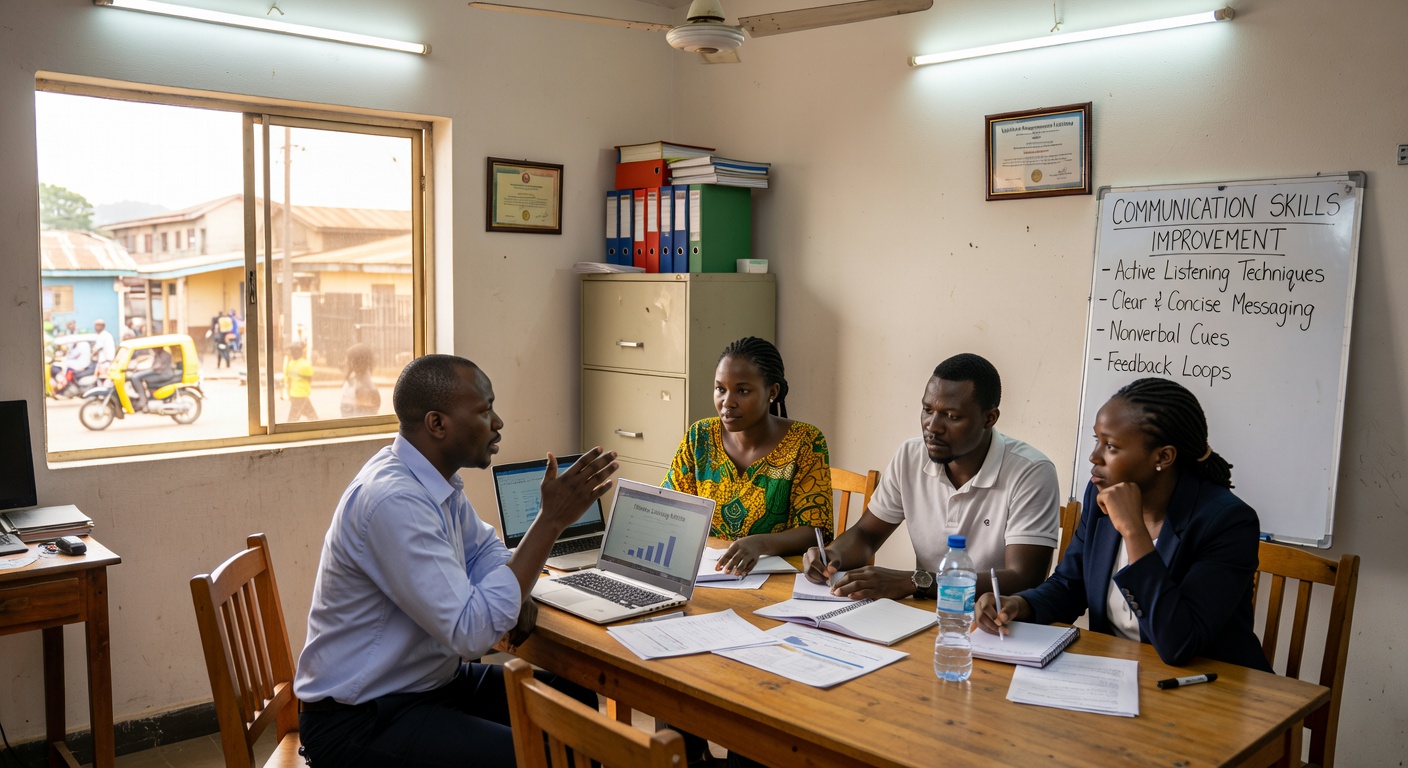
Of all the leadership models that have been examined and applied in Ugandan professional settings, servant leadership — the idea that the primary purpose of a leader is to serve their people, enabling them to perform at their best — consistently resonates most deeply. It is not because Ugandans are inherently deferential or self-effacing; it is because the relational, community-oriented values embedded in Ugandan cultures align naturally with a leadership model that prioritises the wellbeing, growth, and empowerment of those being led.
Servant leaders in Uganda build trust by being consistent, by following through on commitments, and by demonstrating genuine care for their team members as whole people — not simply as means to organisational ends. They create environments where people feel safe to speak honestly, to take initiative, and to fail forward. In a cultural context where saving face is important, this psychological safety is particularly precious and particularly powerful.
The greatest leaders are those who lift others higher — and in lifting them, rise further themselves.
— David Ssemakula, Arise Consulting UgandaPractical servant leadership in Uganda looks like a manager who begins team meetings by checking in on how people are doing before diving into the agenda. It looks like a department head who advocates for her team's needs to senior management, even when it is politically inconvenient. It looks like a CEO who spends time on the floor with frontline staff, listening, learning, and demonstrating that every person in the organisation matters.
Emotional Intelligence: The Core Competency of Uganda's Best Leaders
The single competency that consistently differentiates the most effective Ugandan leaders from those who merely hold leadership positions is emotional intelligence — the ability to recognise, understand, and manage one's own emotions and to accurately read and respond to the emotions of others.
In Uganda's often high-pressure, high-stakes organisational environments, leaders who lack emotional intelligence create toxic cultures almost despite themselves. They take criticism personally, respond to challenges with defensiveness or anger, fail to read the emotional temperature of their teams, and make decisions under pressure that they later regret. The human and organisational cost of emotionally unintelligent leadership is enormous.
The good news is that emotional intelligence, unlike raw IQ, is highly developable. Coaching programmes that focus specifically on EI development — building self-awareness, self-regulation, empathy, motivation, and social skills — produce measurable improvements in leadership effectiveness within relatively short timeframes. Leaders who commit to this development consistently report better relationships with their teams, fewer costly interpersonal conflicts, and stronger organisational performance.
Case Studies: Growth Through Leadership Development in Uganda
From Manager to Inspirational Leader
A mid-level manager at a Kampala-based financial services organisation came to coaching after receiving feedback that his team found him "difficult to approach" and "unpredictable." Over six months of structured coaching, he developed significant self-awareness about the emotional patterns that drove his reactive leadership style — particularly a deep-seated fear of being seen as weak that expressed itself as aggression under pressure. Through targeted EI development and communication coaching, he transformed his relationship with his team so dramatically that staff retention in his department improved from 60% to 92% over the following year.
Building a Leadership Pipeline
A Ugandan NGO working in agricultural development recognised that rapid donor-funded growth had outpaced its internal leadership capacity. By investing in a cohort-based leadership development programme for 20 emerging leaders across the organisation — covering servant leadership, EI, strategic communication, and decision-making under uncertainty — the organisation built the internal bench strength needed to support its next phase of growth without the dependency on expensive external consultants that had previously been the norm.
How to Develop Emerging Leaders in Your Organisation
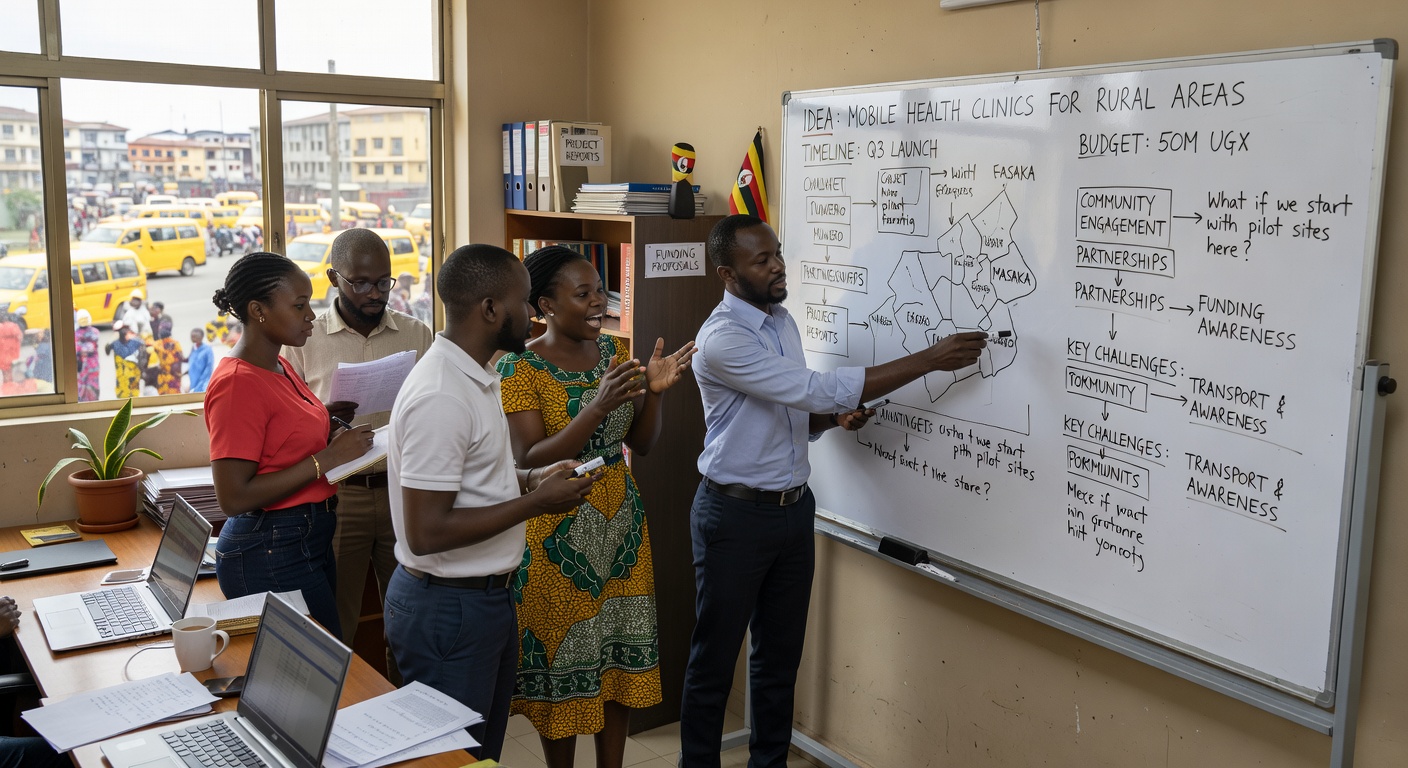
Whether you are an HR professional, a CEO, or an emerging leader yourself, here is a practical framework for building leadership capability within Ugandan organisations:
Start with identification, not assumption. Not everyone who is technically excellent has the desire or disposition to lead. Create a robust process for identifying individuals who have both the aptitude and the genuine desire to grow into leadership — and invest in them deliberately rather than defaulting to seniority-based promotion.
Combine formal development with experiential learning. Leadership capabilities are developed through doing, not just studying. Give emerging leaders stretch assignments, cross-functional project responsibilities, and the opportunity to lead in lower-stakes environments before they face high-stakes situations unprepared.
Pair development with coaching. The fastest, most durable leadership growth happens when formal training is combined with individual coaching that helps the leader integrate new insights into their specific context, relationships, and challenges. A skilled coach acts as a confidential thought partner, accountability partner, and development accelerator.
Create peer learning communities. Uganda's most effective leadership development programmes consistently include a peer cohort element — groups of leaders at similar stages of development who meet regularly to share challenges, celebrate progress, and hold each other accountable. These communities often outlast the formal programme and become lasting professional support networks.
Measure and celebrate growth. Leadership development that is not tracked and recognised tends to fade. Establish clear indicators of leadership effectiveness — including 360-degree feedback, team performance metrics, and retention data — and make the celebration of leadership growth a visible part of your organisational culture.
Uganda's growing economy needs leaders who are as sophisticated as the challenges they face. Investing in leadership development is not a cost — it is the highest-leverage investment an organisation can make. The leaders who emerge from intentional, well-supported development programmes do not simply perform better individually; they build teams, cultures, and institutions that multiply their impact across the entire organisation and, ultimately, across the communities they serve.
4 Comments
Mary Kyomuhendo
March 21, 2026 at 8:55 AM
This is one of the most honest and practically useful pieces on African leadership I've read. The section on the weight of family and community obligations resonated deeply — this is a burden that Western leadership literature simply doesn't acknowledge, and it's real. Thank you for naming it so clearly, David.
James Mwesiga
March 22, 2026 at 11:28 AM
I've been an HR Director for 8 years and the case study about the financial services manager is almost word-for-word the story of one of our own managers. The pattern — technical excellence, fear of appearing weak, aggressive response to pressure — is incredibly common. What changed that manager's story was exactly what you described: a safe space to examine himself honestly. We've since invested in coaching for all our senior staff and the cultural shift has been remarkable.
Sandra Chebet
March 24, 2026 at 3:10 PM
The statistics box really put things in perspective. A 21% productivity increase and 6x ROI from coaching — I'm going to share those figures with our CFO who has been sceptical about investing in leadership development. Sometimes the financial framing opens doors that qualitative arguments cannot.
Timothy Okot
March 27, 2026 at 9:00 AM
As a young professional in Northern Uganda, I find that the servant leadership model resonates far more naturally with how I was raised than the authoritative, top-down models we see modelled in many Ugandan organisations. I believe genuinely servant-oriented leadership is actually more authentically Ugandan than the imported hierarchical styles that dominate. Articles like this give me hope that the culture is changing.
Leave a Comment